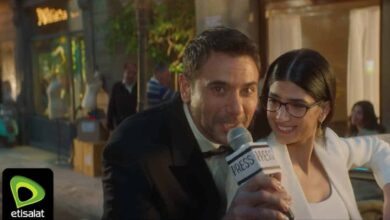
Bank Misr’s ‘Here Is Egypt’ campaign may be Ramadan 2026’s first big winner

Bank Misr opened Ramadan 2026 with a campaign that sounded less like a bank commercial and more like a national chorus. “Here is Egypt.. I will keep coming to you every time,” performed by Mahmoud El Esseily and Bahaa Sultan, does not sell a card, app, or rate in the traditional sense. It sells return, belonging, and emotional certainty. That is exactly why it is working.
The ad arrived early in the Ramadan race, a period when Egyptian brands fight for cultural space as much as media reach. Bank Misr understood the brief. It did not try to out-shout competitors with spectacle alone. It built its campaign around a simpler and harder ambition: make Egypt itself feel like the brand’s most powerful asset.
Bank Misr did not advertise banking first. It advertised emotional return
The line “هفضل كل مرة أجيلك” sits at the center of the campaign’s power. In Arabic, it carries more than one meaning. It can sound like a person speaking to a country, a son speaking to home, or a customer returning to a trusted institution. That ambiguity is not a weakness. It is the campaign’s engine.
This is where the ad becomes smarter than most Ramadan films. It links the bank to Egypt without forcing the link. The viewer completes the sentence on their own. Egypt is where the singer returns. Bank Misr is where the brand says that return belongs. That overlap gives the ad recall beyond its runtime.
The song is the strategy
Many Ramadan campaigns use music. Fewer use music as the main memory device. Bank Misr built this one around a song that carries the brand line instead of decorating it. Mahmoud El Esseily and Bahaa Sultan were not simply celebrity voices added for reach. They were the delivery system for the campaign’s retention layer.
That decision matters because Egyptian Ramadan advertising lives or dies on repeatability. A successful campaign must survive after the first watch. It must move into cars, cafés, TikTok clips, playlists, WhatsApp shares, and casual humming. Bank Misr’s track was built for exactly that kind of migration.
The public song credits also added creative weight. Entertainment outlet E3lam reported that the lyrics were written by Mena Adly El Qei’y, with composition by Mahmoud El Esseily and Ahmed Tarek. That helps explain why the track feels like a proper single rather than an ad jingle stretched into a film.
Why the casting worked
Esseily brings continuity. Over the past several seasons, his voice has become closely associated with Bank Misr’s Ramadan identity. Bringing him back creates familiarity before the viewer even processes the visuals. Bahaa Sultan adds warmth, nostalgia, and emotional credibility. The duet does not feel random. It feels engineered for shared generational appeal.
That pairing also widens the audience without diluting the message. Younger viewers recognize the campaign through Esseily’s modern pop presence. Older and broader mainstream audiences connect with Bahaa Sultan’s emotional pull. Together, they turn a bank ad into a cultural object.
The campaign world extended beyond the hero film
Bank Misr did not stop at the main release. The bank also published a behind-the-scenes version and a sign-language edition. That matters for two reasons. First, it extended shelf life. Second, it turned the campaign into more than a one-off Ramadan drop. It became a content system.
The sign-language version was especially important. It signaled that accessibility was not an afterthought and gave the campaign a second wave of relevance. In a market where many Ramadan ads are remembered only for their soundtrack, Bank Misr added a layer of cultural care that strengthened the brand story.
The creative formula is familiar, but Bank Misr still made it land
There is a fair criticism here. Bank Misr has returned often to the same broad emotional territory in Ramadan: resilience, pride, identity, and collective feeling. On paper, that can look repetitive. In practice, this campaign still lands because the execution is disciplined.
This campaign did not emerge in isolation. It extends the long brand-building arc that helped turn Banque Misr into a national brand again, where annual campaigns became part of Egypt’s wider cultural conversation.
The film does not overcomplicate its message. It stays close to a single emotional truth. Egypt is the place of return. The bank positions itself as part of that return. The song reinforces the line. The visuals support the mood. Nothing fights for attention inside the ad. That creative restraint is one reason the campaign feels bigger than its script.
What marketers should learn from ‘Here Is Egypt’
The first lesson is that a strong campaign does not always need a product-first narrative. For legacy brands, especially in banking, the deeper play is often memory, trust, and symbolic ownership. Bank Misr understands that Ramadan is not only a sales window. It is a cultural ranking system.
The second lesson is that music works best when it carries strategy, not when it decorates it. The line people remember from this campaign is also the brand’s core message. That is not luck. That is structure.
The third lesson is that brand campaigns perform better when they are designed as ecosystems. A hero film, a soundtrack, a behind-the-scenes release, and an accessible version give the campaign more ways to travel and more reasons to be discussed.
Bank Misr’s Ramadan 2026 campaign succeeds because it understands something many brands still miss. In high-noise moments, attention alone is cheap. Belonging is expensive. “Here is Egypt” did not just ask viewers to watch. It asked them to feel that the brand already belonged to them.